

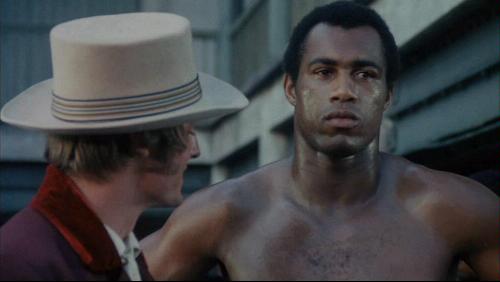
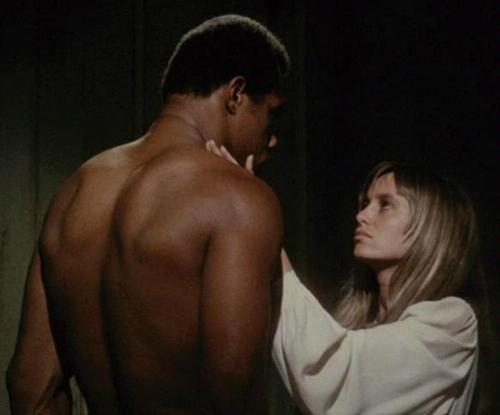
I am a huge fan of science fiction and horror. However, nothing prepared me for the treachery and sorrow of "Mandingo." Not since "Planet of the Apes" have I seen a movie where humans are treated worse than animals; they are brutalized, degraded, and murdered because their skin color is different. Since the beginning of time, humans have been enslaved by other humans. This occurred often in war when the vanquished were forced into slavery by their conquerors. However, America was not at war with Africa. Slavery was committed for greed and lust. I've seen countless movies about vampire families, but none of these families were as perverted, cruel and twisted as the Maxwells of Falconhurst Plantation. Slaves are bred like cattle - their babies are separated from them and sold like puppies; they are forced to fight like dogs and roosters and they are forced to have sex with their owners; and they are denied education. Worst of all, they are not allowed to read the Bible; their owners fear that they might discover that they have souls and begin believing they are just as good as white people. In "The Color Purple," Celie (Whoopie Goldberg)is a brutalized young black woman. In "Mandingo," we have Meade (heavy weight boxer Ken Norton) who is victimized by the society in which he is unfortunate to live. His sexually depraved master, Hammond Maxwell (Perry King), can not be faithful to his wife and is constantly sleeping with his slaves. Maxwell has always dreamed of owning a Mandingo; he buys Mede and trains him to be a fighter. Mede must fight other slaves to the death or be killed himself. He must mate with his sister, Big Pearl, or die. He must make love to his master's alcoholic wife Blanche (Susan George) or die. Poor Mede doesn't have much of a choice about anything. I guess that is what it means to be enslaved. Mede is trapped in a bizarre world, more bizarre and dangerous than that of "The Planet of the Apes," "Logan's Run," or "Soylent Green." A world in which Mede has no hope. Tragedy will prevent him from seeing a future in which slavery has ended. "Mandingo" is highly recommended for fans of action adventure and passionate drama.
Good movie
This was advertised as a "multi-format" but it is really Blu-Ray only.
It came as promptly as promised, well packaged and in excellent condition for such an old, used product. It played as new.I'm glad I found this very rare Susan George movie and, although she can never disappoint me, I must admit that she and James Mason demonstrated the worst Southern accents I have heard since Michael Caine in Hurry Sundown! Pity there very no subtitles!
Some people will enjoy this. I did
This is not a review on the film itself, but rather a review for the blu ray disk. I have purchased this particular blu ray 4 times already, and each time I've had to send the movie back to Amazon because the disk itself was defective.The first time I bought this, I found the back of the disk all scratched up even though it was brand new. It failed to play in my blu ray player. Naturally, I returned it and ordered a replacement. But that disk also came riddled with numerous fingerprint smudges and scratches! And just like the first disk, it also could not play in my blu ray player. I promptly returned it.A couple months later I decided to try again, hoping this time I would get a copy of the movie that actually works. I figured third time's the charm. The third copy arrived and, unbelievably, it also could not play in any of my blu ray players! For some reason the disk could not be recognized/load. Thoroughly annoyed at this point, I requested a replacement. Copy four comes and same thing happens: the disk does not play on any blu ray device!I'm not sure if these are bad batches or what, but I would NOT BUY this product. Shame on the manufacturer for not doing quality assurance on these disks before sending them out to customers. I also saw other people leave similar reviews about their disks not working, so I am not alone in my experience.
This is like my third time watching this movie. What I liked about it is the acting, and "authenticity" of the film; not glossed over like some in the same genre. We should NEVER FORGET the HORRORS of slavery so it will NEVER be repeated. And, watching movies like this always makes me "wonder" how it is that so called humans can be "so cruel?" The other thing that comes to mind when watching this movie, which I believe is pretty historically accurate, is the SHEER HYPOCRISY of these people. Okay, so they treated these poor black folk "worse than animals," and thought they WERE animals, and yet the men had sex with them "every chance they could." What's up with that? If they were so awful, then make love to your wives. And, Blanche was no better. And, Hammond could sleep with a slave, but his wife couldn't? Talk about the "double standards" of the day. And, if I thought someone was "intrinsically vile," I certainly wouldn't want to have sex with them. It just doesn't make a speck of sense to me. I think these people were "crazy." Contrary to what many reviewers have said, I do NOT consider the ubiquitous nudity in the film "soft porn" or anything like that. This film was just very "candidly" showing our generation the "heinous things" done to a downtrodden people who had no rights at the time. OPPRESSION AND CRUELTY were "over the top," but I know that's what happened; I still can't quite wrap my head around it all. This movie is what I would call a "DOCUDRAMA."
This film is about slavery and the plantations. However, it is quite different from many other films which depicted this era because:1.) Most other films gloss over the sheer brutality and only give you glimpses of the physical violence and sexual brutality endured by slaves; and2.) Most other films try to have at least one character playing the role of the "white but conscientious objector" to these social and cultural evils. Importantly, this "redeeming" characters serves as a kind of mascot for the idea that there were always kind and conscientious slave owners even during this era.Mandingo offers none of those psychological safety nets. These are scenes where an adult white male is raping a 13-year-old slave girl, and indulges in sadistically beating the girl while abusing her sexually. If this scene makes you very, very uncomfortable, then the film makers have done their job and done it well. This is what you are supposed to feel: horrified at having to come face to face with the cultural norms of that time. In many ways, this movie is NOT entertaining. There would be nothing entertaining about watching a historical fiction about the Jewish holocaust; and if such a film were overacted and melodramatic, you should not dismiss it out of hand. It would be better to ask yourself a simple question: what value do you get from this film?With respect to Mandingo, what you do get is a brutally transparent, if somewhat poorly scripted and histrionically acted, view of the personal lives of people living in a slave breeding plantation. The plot line allows the viewer to recognize that slavery destroyed the humanity of both the enslaved and the slave-makers. No one wins in this context. The black/white, slave/master paradigm is simply incompatible with human dignity and the American experiment with slavery was nothing short of socio-cultural experiment in brutality, much like other eras in later history, e.g. Mao's cultural revolution, Polpot's killing fields, Stalin's gulags, the Nazi's paradigm of labensraum and purifying the race etc. The only difference is that American slavery, as a social order, persisted for much longer than the 20st century's variations on the theme of human destruction being seen as a virtue or social norm.It is not surprising that some of the people who wrote reviews on this film found it to come across like "soft porn". I was actually quite surprised by the amount of full frontal nudity and unabashed depictions of sexual interactions, ranging from the uneasy tenderness and intimacy between Ellen (slave) and Hammond (owner); the private agonies of Blanche (slave owner's wife) who's husband won't pay attention to her, and her exploitation of her husband's male slave, Mede, to remedy her sexual frustrations and assert some type of control over her situation. The complications in private relationships when "slavery" was the legal status of one of the partners in the relationship. Issues of separation of slave parents and children, the nascent abolition movement, the balancing of an obedient affect against the indignation raging just beneath the forced half-smile and "Yessah Massah!" - NONE of this is meant to entertain you. It is intended to give you an opportunity to temporarily immerse yourself in another culture. Saying that the melodramatic script and overdone acting cause this movie to fail is really a way of deliberating circumventing the hard lessons held in this movie viewing experience. And those, I think, are as follows:1. Real conversations in the slave area were not likely to be Oscar nominated. Ordinary speech often isn't. So, don't be put out by the melodramatic script. Take it as a more fair representation of the banality of daily life and discourse on a slave breeding plantation. That's all.2. The bluntly portrayed sex scenes are not meant to make you feel comfortable. Take them at face value. The lived reality of those times were certainly far more uncomfortable and unforgiving than portrayed even by this film.3. After watching this film, if you feel some type of dissatisfaction, then I think you are on the right track, because you cannot really be looking for satisfying entertainment in a film that treats a topic that is as bleak as a slave breeding plantation. So, why is the sense of dissatisfaction a good thing? Perhaps because it shows that you are motivated to somehow do more justice to that era than this movie did. And you don't need to make a movie in order to do that; you can do that by representing the issues in conversation more accurately to others in your own life. And when mulling over this particular period in history, put aside your need to be entertained by lean scripts and polished acting. Be, instead, satisfied to spend a couple of hours honestly contemplating the banality of evil.Evil really is banal. And this film demonstrates it by forcing scenes of rampant lust and violence to co-exist uneasily with the melodrama and namby-pamby, marmalade-y soundt...
After finishing my first watching of Mandingo, I searched online to see what other people had to say about it. Robert Ebert in particular had given a scathing review back in the 70's, and many others have shared their 'disgusted' perspectives on this film as well. I watching this film one day after finishing the novel Uncle Tom's Cabin, and what strikes me as rendering this film powerful and brave--regardless of whatever flaws it has with regard to perspective--is how much its details and themes are in-sync with Beecher Stowe's Civil-War-inciting classic. In fact, I'd go so far as to say that the dialect of spoken by the white characters alone might be part of what prompted so many 'disgusted' reviews over the years. I can't remember another slavery-era film in which white characters used such a think southern dialect... But through reading Uncle Tom's Cabin, I learned 'the hard way' (by having to slow my reading speed until I got the feel for it), that only the highest class whites in the south spoke the King's English. Perhaps the prevalence of dialect varied a lot, from region to region. But I'd say that, part of what bothers people about this film are the historically-accurate details that appear, from our vantage point, to be especially vulgar or brutal. And viewers can point to the style in which African American slaves were depicted and portrayed while being sexually exploited throughout the movie... But why not treat those aspects as searingly honest representations? I think audiences might crave appropriateness over truth-telling, and that this film might be more highly respected by those who want to be 'hit with' a vision of plantation life, rather than be 'entertained' by a story that respects its audience's modern sensibilities. I'm in awe that this movie was made at all, and that the nuances and (superficial) complacency regarding the sexual power dynamics between 'a good master' and his slaves made it to the silver screen.
...is the relationship between Hammond and Ellen. Perry King and Brenda Sykes do what they can to fashion some kind of humanity out of the depravity that each of their characters were subjected to in the Louisiana of the 1830s. Hammond is in love with his slave; ironically, given the general station of black women on plantations, a virgin when he met her. Meanwhile, it is the white woman he marries, his cousin, who has run afoul of sexual impurity, giving him the excuse (I guess, since they needed no excuse in those days) to continue sleeping, essentially, with another woman. Hammond is an exploitative white male slave owner, of course, who has certainly had his way with his female slaves, and all the women in this piece are victimized (including his wife), but again, at least there was some tenderness, some kind of (warped) love story within the insanity. If you have to watch this one, or feel compelled to sate your curiosity, go with it on that. It will help you get through it. Oh, and the legend that is James Mason does old man slaver well.
ASIN# B014L2Y33M Though I'd give this Olive Films bluray edition three stars. (No extras, no subtitles.) On the plus side: excellent cover art, the picture and sound is vastly improved. Worth the upgrade from the budget priced Legend release (which looks awful).One of the most neglected and underrated Hollywood films of its era, Richard Fleischer’s blistering and undeniably lurid 1975 melodrama about a slave-breeding plantation in the Deep South, set in the 1840s, was widely and unjustly ridiculed as camp in this country when it came out. But apart from this film, Herbert J. Biberman’s 1969 Slaves, and Charles Burnett’s 1996 Nightjohn, it’s doubtful whether many more insightful and penetrating movies about American slavery exist. The director, Richard Fleischer is the most famous filmmaker you (might've) never heard of - his imdb page lists almost a hundred films - some truly great, most of which you have seen.An aside: Quentin Tarantino’s thigh-slapping Django Unchained — a film so historically whimsical that it can show us a slave who’s an expert marksman, can read, and even puts on sunglasses after he becomes a free man — clearly isn’t one of them; at best it’s another Tarantino Pulp Adventure for ten-year-old boys — ten-year-old girls need not apply. That said, I liked it. QT definitely got a "pass" from the majority of critics. (Django gets his revenge after 90 minutes of degregation - a happy PC/ wish-fullfiment ending that placated the liberal (and Urban) audiences. Curiously, this same "logic" doesn't apply to movies such as I Spit on Your Grave and the like. Odd. Scripted by Norman Wexler (Joe, Saturday Night Fever) from a sensationalist novel by Kyle Onstott; with James Mason, Susan George, Perry King, Richard Ward, Brenda Sykes, and Ken Norton, who all give brave and fantastic performances.
I'm not a fan of violence and I did mute/look away for 2 scenes in this film, that being said, read on. Yes, this is an offensive, laughably over the top slave film, chock full of human cruelty. Just as you pick your jaw up after seeing some form of crazy situation, another replaces it and jaw drops again. However, despite it's fictional depiction of a slave era Louisiana plantation's racist violent soft core sensationalist melodramatic blaxploitation, it's shedding light on a dark part of American history not much mentioned, the use of slaves as sex objects. I know that this sort of thing occurred, it had to of. Thomas Jefferson had a mixed race child but you know he probably engaged with many other wenches, times that by the entire slave trade and we wonder why we're so f$%^&d up as Americans! Considering our current political situation and REPARATIONS being discussed, look at this move and you'll agree it's time to heal the wounds. Be advised, slang is spoken in the vernacular used in the South in those days, do yourself a favor and put on closed captioning. If this film were re edited with some of the violence and sex removed, I feel this film could be used for education purposes.
Depicts slavery at its worst. A lot of nudity and some the dialogue is so screwy as to be ridiculous. This film tries to show the horror of slavery but brings up the issue of concubine slaves of the white master or a "wench" who is "craved." Again, some of the dialogue and language usage is ridiculous but it is focusing on a stereotypical view of slave owners as far as their dialect but it is hard to believe where they could it be as bad as in this movie (although the very act of being a slave owner is ignorant) some certainly were ignorant). However, the story line would be good in a book...meaning the relationships re: master, "bed wench" slaves and "white lady" tolerance of concubinage. Well, it was so bad it was good I guess. It was still entertaining in a almost ridiculous way and I really hope no slaves were ever killed the way depicted but it is possible and the horror of having one's child sold is true enough.
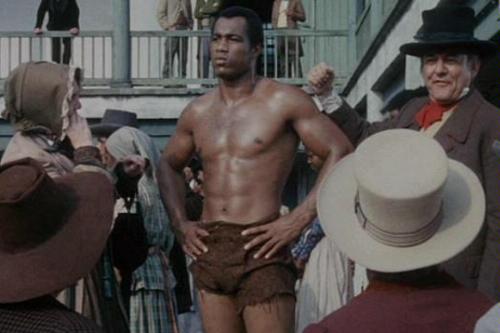
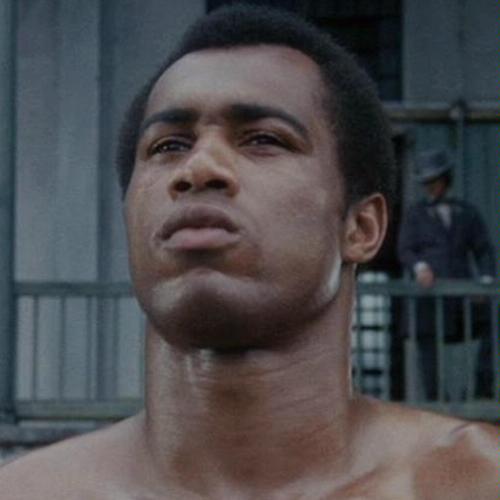
Quentin Tarantino has cited "Mandingo" as one of only two instances that major studio made a full-on, gigantic, big-budget exploitation movie, the other being "Showgirls". With Dino De Laurentiis producing and highly regarded director, Richard Fleischer at the helm, this was certainly no low-budget sex/blaxploitation film like many that were made in the 70s after the Hayes Code was relaxed. It certainly shows plenty of skin and the sex scenes are rather explicit, but based on my personal memory, it is a fairly faithful rendering of the novel by Kyle Onstott. And the nudity and sex are not as gratuitous as in most exploitation films of the 70s. That is because this film is intended to show black slavery in the Antebellum South in all its sordid depravity. It certainly does that quite well! As much as a third of the indigenous Mandinka people of West Africa (called Mandingo in the South) were enslaved through capture in war and shipped to the Americas. They were highly sought after by slave owners for their strength and stamina...and some were used in gaming as fighters as shown in this film. While the film was big-budget, the only A-list actor featured is James Mason and he was nearing the end of a long and distinguished career. Mason plays the patriarch of a slave-breeding plantation family in Louisiana...probably the worst sort of plantation where slaves were bred like cattle and the slave owners were active participants in the breeding. The rest of the cast, including Susan George, Perry King and boxer, Ken Norton as the Mandingo, Mede, perform well too. One of the best of the exploitation films; highly recommended for fans of that genre and for those who can bear to watch a realistic expose of slavery as it really was.
What would you do if you had complete power and absolute control of another human being? That was a question asked in the movie "Caligula". What would you do if you had the power of life and death? I believe the question to be relevant here as well.Basically, this movie is about black slaves getting caught up in the games that the white slave owners are playing amongst themselves. More often than not, the slaves end up victims and their lot in life follow the fortunes (and misfortunes) of their masters. The story takes place in the South, on a plantation owned by Warren Maxwell.The distinguished actor, James Mason, plays Warren Maxwell. A young Perry King plays his son, Hammond. British actress Susan George plays Blanche. And boxer Ken Norton plays the role of Mede, the Mandingo.Getting on in years, Maxwell wants his only son (Hammond) to provide him a grandson so they can keep the family line going as well as to have someone in line to inherit the plantation. The younger Maxwell goes to town and picks up a woman to be his wife. The audience knows right away that the woman, Blanche, is just trouble waiting to happen. Hammond and Blanche agree to marry. On their first bedding, Hammond realizes that Blanche is not a virgin. Blanche throws a tantrum and insists that she was until that night. While in town, Hammond also purchases a couple of slaves. A woman "bed wench" and a muscular male slave called Mede. Eventually, he takes them all back to his father's plantation.Hammond and Mede develop a fondness for one another. Meanwhile, Blanche has taken to the bottle and spends most of her days in a drunken stupor. Hammond trains Mede for the fighting ring. In return, Mede shows his loyalty by giving it all he has in the fighting ring for his master Hammond. The elderly Hammond spends his days trying to transfer the pain of his gout and his arthritis to his house boy. Meanwhile, Hammond avoids his wife and instead beds his black women, leaving Blanche unfulfilled. Now, as you can see, this is a recipe for trouble. And trouble does indeed come to the plantation.This is a good movie. It was made during the middle of the 1970s, when blaxploitation was a very popular film genre. This is blaxploitation, not "Roots"! And the humiliation and the degradation of black slaves are depicted in a way that is very excessive and over-the-top. Sexual exploitation is always a present part of the theme and the plot. The sleaze factor is there. I am reminded of the movie "Caligula". There is a sequel called "Drum". Although it is not a direct sequel in terms of plot, the character of Hammond Maxwell returns (this time played by Warren Oates).
This movie, based on the pulp fiction ante-bellum novels of Lance Horner, is a unique variation on the blaxploitation flims of the 1970s. Its depiction of slavery, complete with whippings and sexual exploitation, are de rigeur plays to the "black rage" of that genre, with more than a little sexual titillation thrown into their depiction. The appearance of some reputable actors here, fairly good production values and Ken Norton's embodiment of a powerfully virile black manhood makes this particular expression of that genre a cut above most blaxploitation films of the time. There is also a fair amount of nudity, including unsimulated scenes in which Norton and lead actor Perry King are visibly aroused while being fondled through their clothes by women. Or loin-cloth in the case of Norton.This movie expressed a unique moment in American film-making when mainstream movies in the 70s (this one is from Warner Brothers) were sexually and socially more daring. This was partly a legacy of the 1960s, but largely because of the growing influence of porn films. The impact of an exploding porn film industry made depiction of nudity and sexual themes, including fetishes like whippings, much rawer and unmediated than anything before or now in mainstream cinema. This film version of "Mandingo" is a good documentation of that moment.Those interested in this film should be warned that there are some censored versions being sold, in keeping with our own times in which plenty of nudity, sex and violence is fine, so long as its scripted, air-brushed and simulated in just the right ways. Those things as depicted here are not.
That this movie is shocking is an understatement.That it only recieved an mild R rating is far too generous.It is based on a best selling book that looks at the steamy underbelly of life on SOME Southern plantations. There are a number of "one way" sex scenes as Plantation Women are brutalized by their masters. There are some great actors and Boxer Ken Norton does a most plausible job in the title role. Hammond Maxwell(Perry King), at first,seems somewhat sympathetic to the plight of the slave, but then falls in line with all the other Slave Holders in using African American Women for their own sexual gratification. He gratifies his father's( James Mason) desire by obtaining a Mandingo(Ken Norton)at the slave market. Norton gets into a fight and is victorious over another slave. King immediately starts training Norton to fight. Norton fights a "bloody" match in which he is severly injured, but so what- he made a lot of money for King! James Mason, demanding an heir has encourged his son to marry a nearby Plantion Owners daughter. The daughter(Susan George) portends to be the proper virgin, but actually has been in an incestious relationship with her brother. To further complicate things, King has had a pleasureable sexual relationship with one of his future father in law's slaves. King purchases this slave to take home. King both takes the slave home and marries the daughter. Finding out about both the lack of virginity and the incestious relationship, King neglects his new wife and continues to see the slave lady. George, seeking revenge, turns her attentions to Norton. The plot thickens! Origionally slated to be presented in four parts, producer De Laurentis followed up with Drum. This powerful movie evokes anger in people of all races.